
Facilitating Meaningful Dialogue in Ireland: A Conversation with
Dr Kerim Balci
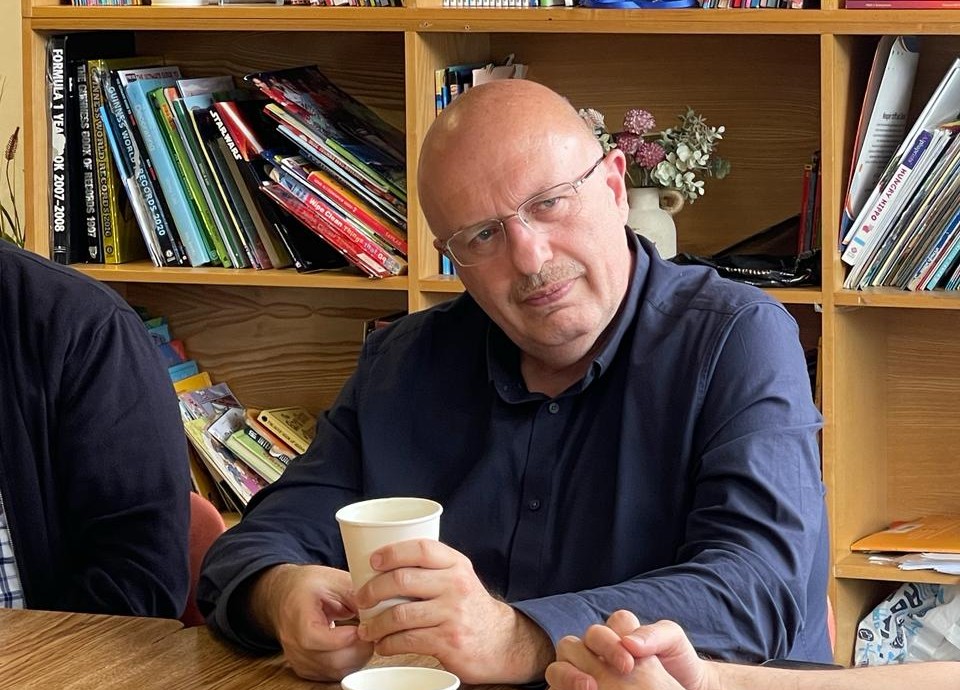
As part of The Common Ground series, Éire Dialogue had the pleasure of welcoming Dr Kerim Balci, a respected scholar, writer, community organiser, and experienced dialogue practitioner. Dr Balci is Director of the Centre for Risale & Hizmet Studies at Respect Graduate School in the United States, where he also teaches on subjects including Islamic thought, hermeneutics, and the writings of Bediuzzaman Said Nursi and Fethullah Gülen. He has also contributed to dialogue work in Europe and the UK through lectures, community engagement, and interfaith initiatives.
The session focused on a timely and important question: how can meaningful dialogue be facilitated in the context of Ireland’s unique religious, cultural, and social landscape?
Ireland is a society shaped by deep religious memory, rapid demographic change, migration, secularisation, and an increasingly diverse public space. In this context, dialogue is not simply about bringing people into the same room. It requires sincerity, preparation, humility, and a genuine willingness to understand the other. Dr Balci’s reflections encouraged participants to think beyond symbolic engagement and to consider how dialogue can become a practical contribution to community life.
Dialogue in the Irish Context
Dr Balci spoke about the importance of understanding the particular context in which dialogue takes place. Ireland’s faith communities do not exist in isolation from history, culture, politics, or social change. Any serious dialogue initiative must therefore pay attention to the lived realities of communities, including their memories, sensitivities, values, and hopes for the future.
He emphasised that dialogue should not be reduced to formal meetings or polite conversations. While respectful discussion is important, genuine dialogue requires deeper engagement. It involves listening with care, recognising shared human concerns, and building relationships that can continue beyond a single event.
This message strongly reflects Éire Dialogue’s own approach to community cohesion: bringing people together across cultural and religious lines, empowering others to do the same, and contributing to wider thinking on dialogue and community building.
Representing Universal and Religious Values
A central theme of Dr Balci’s talk was the question of how faith communities can represent both universal values and religious values in a way that contributes positively to wider society.
He highlighted that values such as compassion, justice, hospitality, sincerity, service, human dignity, and care for the vulnerable are not abstract ideals. They must be visible through action. Religious communities, in particular, have a responsibility not only to speak about these values but also to embody them in their relationships with neighbours, institutions, and the wider public.
In this sense, dialogue is not about watering down religious identity. Rather, it is about expressing one’s faith and values in a way that opens doors, builds trust, and contributes to the common good. Dr Balci encouraged participants to see religious identity not as a barrier to civic participation, but as a source of ethical responsibility and social contribution.
From Conversation to Action
One of the strongest messages of the session was the importance of action in building bridges between communities.
Dr Balci reminded participants that dialogue cannot remain only at the level of words. Meeting people, visiting communities, sharing meals, attending each other’s important occasions, working together on social issues, and showing up consistently are all essential parts of bridge-building.
He stressed that meaningful dialogue begins with intention, but it must be sustained through action. Good intentions alone are not enough. Communities need to create opportunities for genuine encounter, where people can move beyond stereotypes and see each other as neighbours, colleagues, friends, and fellow citizens.
This understanding of dialogue is especially important in Ireland today. As society becomes more diverse, active citizenship becomes a shared responsibility. Building a peaceful and cohesive society requires people who are willing not only to talk about inclusion, but also to practise it in everyday life.
Active Citizenship and the Common Good
Dr Balci also connected dialogue with the idea of active citizenship. He encouraged participants to think about how faith and community groups can contribute more meaningfully to the wider society in which they live.
Active citizenship is not limited to political participation. It includes volunteering, supporting neighbours, engaging with local institutions, contributing to public conversations, and working for the wellbeing of society as a whole. In this broader sense, dialogue becomes a form of civic responsibility.
For Éire Dialogue, this point is particularly significant. Our work is rooted in the belief that dialogue should serve society. It should help people understand one another, reduce prejudice, create trust, and encourage cooperation across differences.
Why This Conversation Matters
Dr Balci’s contribution offered both inspiration and practical guidance. His message was clear: dialogue must be sincere, contextual, value-driven, and action-oriented.
In a time when communities can easily become divided by fear, misunderstanding, or social distance, conversations like this remind us of the importance of creating spaces where people can meet with openness and purpose. The work of dialogue is not always quick or easy, but it is deeply necessary.
Through The Common Ground series, Éire Dialogue will continue to bring people together for meaningful conversations on belonging, faith, integration, citizenship, and the shared future of our society.
We are grateful to Dr Kerim Balci for sharing his wisdom, experience, and thoughtful reflections with us, and to all participants who contributed to the conversation. The session was a valuable reminder that common ground is not something we simply find, it is something we build together.